Content for teachers and students about robotics in our world. Is robotics the Perfect Platform for 21st Century Learning? Read on!.. Would you like your student robotics activities presented here? Leave a comment or Facebook Messenger me...
"An adorable toy robot is teaching kids how to code
He can walk, do a funky dance, and even play soccer.
Developed by the British robotics company Robotical, Marty the robot is supposed to be simple enough for children to program. Kids can write the software that powers Marty using Scratch, a graphic programming language that lets them drag and drop commands to build the robot’s movements.
By using fewer motors in Marty’s legs than in other two-legged robots, the company was able to lower production costs and make Marty easier to program. Marty’s creator, Alexander Enoch, says he hopes the robot will be an affordable classroom tool that get kids excited about programming and engineering.
The company plans to sell the robot in 2017 for around $120..."
(from T.H.E Journal)... a interesting and series application of robots to teach important curriculum...
Robot Set Helps Teach Math and Science
Robot Set Helps Teach Math and Science
Can robots teach math? That's what RobotsLab is promoting with the release of its latest robotics product, the Box,
a kit of hardware and curriculum intended to teach Algebra 1 and 2,
physics, geometry, trigonometry, and pre-calculus for grades seven
through 12. The Box comes in two versions, one for $3,500, which
includes four robots, a tablet computer that acts as the control
station, accessories, and 50 lessons and quizzes. A "Deluxe" Box, which
is $3,999, includes access to additional lessons throughout the year and
an extended warranty.
Each lesson is an app on the tablet that controls the robots in the
package. Every module comes with an instructional video, a touch-based
lesson, a quiz, and additional teaching materials. For example, a
robotic ball is used in lessons on quadratic equations, statistics, and
probability; a robotic arm helps teach geometry lessons on triangles and
angles as well as trig lessons on arc, length, sine, and cosine; and a
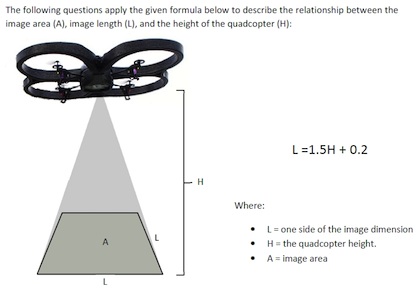
"quadcopter" provides physics lessons in gravity, acceleration, and
frame of reference.
RobotsLab's Box kits enable teachers to use robots to illustrate math concepts.
According to one lesson, the robots are used to "expose scientific
principles providing a bridge between the abstract topics and the real
world." In order to solve quizzes, the students have to work through
equations, come to an understanding of physical forces, and perform
scientific investigation.
Lego
robotics is hands-on, collaborative, authentic learning experience, and Mark Gura wants you to give it a try.
Gura, the author of the ISTE book Getting Started with Lego Robotics,
understands how daunting it
can be to start a robotics program from scratch. That’s why he wants to
help other educators like you by sharing information you need to get
started. He’s one of three guests presenting “Creative Technology Use
in K-12,” a webcast hosted by School Library Journal in partnership with ISTE.
Sign up for the Jan. 27 web event
to learn how you can teach
coding to kids of varying ages, abilities and learning styles, and find
resources and tips on student-designed robotic projects.
Gura will be joined by Colleen Graves, a
teacher-librarian from Denton, Texas, and Sharon Thompson, the CEO and founder of Dream Workshop.
The webinar is past but the value the book offers continues!
I got the message below in my In Box this morning. This looks like a very good learning resource to me! I love the story behind it as well. Yes, far better than from a "fancy PR agency"! Mark
Hi !
As a father, I
am always concerned about the virtual world my daughter seems to be
immerse every time there is a screen in front of her. And I am not
saying that just because. I teach robotics at NYU Shanghai because I
think there is something valuable in technology for our next generation.
As
a teacher, I feel we are just not equipped properly for the speed of
change that this digital era brought to us. We have iPads at school,
smart screens but not so much changed in class management. I still have
to show them and ask them not to touch so many things when I teach
science at primary schools. And I feel sorry for that. We should be able
to ask them to experiment non-stop.
In
any case, I made an Arduino robot that works with RFID cards for my
classes. And I think it is something any Pre-K or Grade 1~4 would want
to have. Let me attach a press release I prepared. It might not be
professional but I thought you would rather read from me directly than
from some fancy PR agency.
We are live at kickstarter (http://ks.plobot.com) and we just got selected by them as *projects we love*.
It makes sense: Imagine there are two cars waiting at a junction, one
self-driving, and one human-driven. The self-driving car has
right-of-way — but the human goes anyway. The self-driving car,
programmed to protect its passengers and avoid harming other drivers,
will stop itself — letting the aggressive human driver go.
Of course, this kind of behaviour is illegal. But that
doesn't stop some drivers from defying the rules of the road today.
Faced with a predictable autonomous vehicle with lightning-fast
reflexes, it will likely encourage this behaviour even more.
The study — conducted by researchers from the London School of
Economics in partnership with Goodyear — had 12,000 respondents from 11
European countries. It found that the majority of people are on some
level uncomfortable with autonomous vehicles — whether riding in one or
just being on the road alongside one while driving a manual vehicle.
Getting Started with LEGO Robotics. Anyone who works with kids can do LEGO Robotics, a rich and highly motivating platform for important STEM Learning! (surprisingly affordable, too) This books explains it all!